We’ve passed the “awareness” phase. Most people know mental health matters. The gap isn’t knowledge — it’s systems.
Knowing you should “check in with yourself” is useless without a structure for doing it. Knowing that therapy works better with self-reflection doesn’t help if you show up to your session and blank on what happened the last two weeks. And knowing that mood fluctuations are normal means nothing if you can’t spot your own patterns.
That’s where mental health tracking templates come in. Not as a trend. As a tool.
A 2024 study published in JMIR Mental Health found that participants who used structured mood tracking for 8+ weeks were 2.3x more likely to identify emotional triggers than those relying on memory alone. The data is clear: writing it down changes what you see.
Here’s how to actually use these tools — and which formats work best for different goals.
Why Tracking Your Mood Matters More Than You Think
Your brain lies to you. Not maliciously — it just compresses. You remember the worst day of the week and forget the three decent ones. You remember the panic attack but not the slow buildup that preceded it.
Mood tracking breaks this cycle by creating an external record you can review with clear eyes. Specifically, it helps with:
- Pattern recognition: You notice that your anxiety spikes every Sunday night, or that your mood drops predictably on day 22 of your cycle, or that skipping breakfast correlates with irritability by 2 PM.
- Therapy preparation: Therapists consistently report that clients who bring written records make faster progress. Instead of spending 15 minutes reconstructing your week, you walk in with data and spend the full session working.
- Medication monitoring: If you’ve started or adjusted medication, a daily mood log gives you (and your prescriber) an objective record of changes over 4-8 weeks — not just a vague “I think I feel better?”
- Accountability without judgment: A tracker doesn’t guilt you. It just records. Over time, that neutral record becomes the most honest mirror you have.
The key insight: tracking isn’t about fixing yourself. It’s about seeing yourself clearly.
The Daily Check-in Format That Actually Works
Most people abandon mood journals within two weeks. The reason? They’re too open-ended. “How do you feel today?” is a terrible prompt when you’re already overwhelmed.
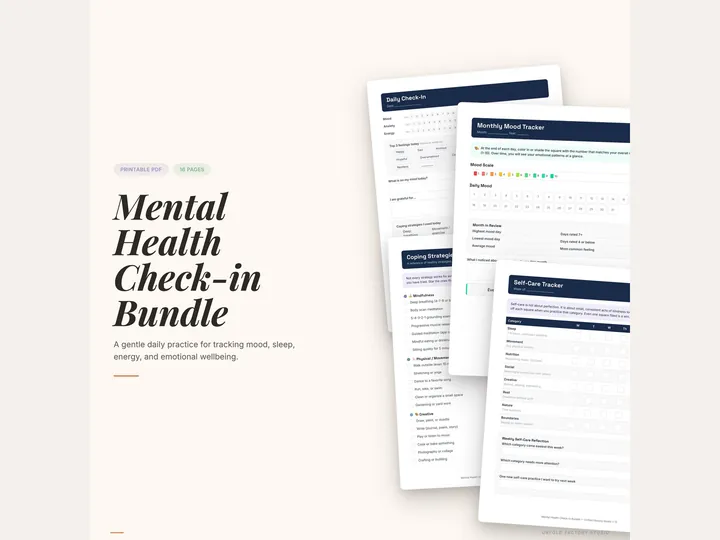
A structured daily check-in template removes the friction. The best formats include these five elements:
- Mood score (1-5 scale): Simple, fast, trackable over time. No need for elaborate emotion wheels on a Tuesday morning.
- Top trigger or stressor: One line. What’s weighing on you right now? Naming it reduces its power.
- Sleep quality (1-5): Sleep and mood are so tightly linked that tracking one without the other misses half the picture. A 2023 meta-analysis in Sleep Medicine Reviews found that poor sleep quality predicted next-day mood deterioration with 73% accuracy.
- Energy level (1-5): Separate from mood. You can be in a good mood with zero energy, or anxious with high energy. Both matter.
- One gratitude or positive moment: Not toxic positivity — just a counterweight. Even on bad days, noting “the coffee was good” keeps the log from becoming a pure negativity archive.
Total time: 90 seconds. That’s it. If your mental health journal takes longer than brushing your teeth, it won’t survive the first week.
Our Mental Health Check-in Bundle uses exactly this format — daily check-ins with mood, sleep, energy, triggers, and gratitude in a single-page layout you can print weekly.
Weekly Reflection Is the Real Habit (Not Daily Tracking)
Here’s what most mental health content gets wrong: they tell you to journal every single day, and then you miss Wednesday, feel guilty Thursday, and quit by Friday.
The daily check-in is the data. The weekly reflection is the insight.
Set aside 15-20 minutes once a week — Sunday evening works for most people — and review your daily scores. Ask yourself:
- What was my highest-mood day? What made it different?
- What was my lowest? Was there a trigger I can identify?
- Did my sleep quality correlate with my mood this week?
- Is there a pattern repeating from last week?
This is where the real value lives. Individual daily entries are data points. The weekly review is where those points become a trend line. After 4-6 weeks, you’ll see things about yourself that no amount of introspection could reveal.
Pro tip: Bring your weekly reflections to therapy. Three months of weekly summaries is more useful to a therapist than a year of vague recollections.
Shadow Work Journals: Going Deeper Than Gratitude
Gratitude journals have their place. But if you’re doing serious emotional work — processing childhood patterns, understanding relationship triggers, examining beliefs about yourself — you need something with more depth.
Shadow work is a framework for exploring the parts of yourself you’ve suppressed, denied, or been taught to hide. It’s not about darkness for its own sake. It’s about integration — understanding why you react the way you do.
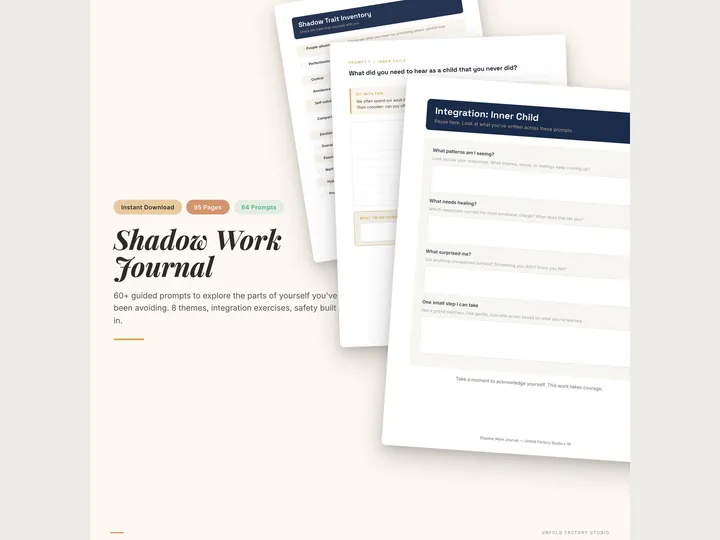
A structured shadow work journal uses targeted prompts to guide this exploration:
- “What emotion did I avoid this week, and why?”
- “When someone criticizes me, what’s the story I tell myself?”
- “What pattern from my childhood showed up in my adult relationships this month?”
- “What am I pretending not to know about myself?”
These aren’t comfortable questions. That’s the point. Growth happens at the edge of comfort, and a journal with structured prompts keeps you moving forward without spiraling.
Our Shadow Work Journal provides guided prompts across 12 themes — inner child work, boundary patterns, self-worth beliefs, relationship dynamics, and more — with space for freewriting after each prompt.
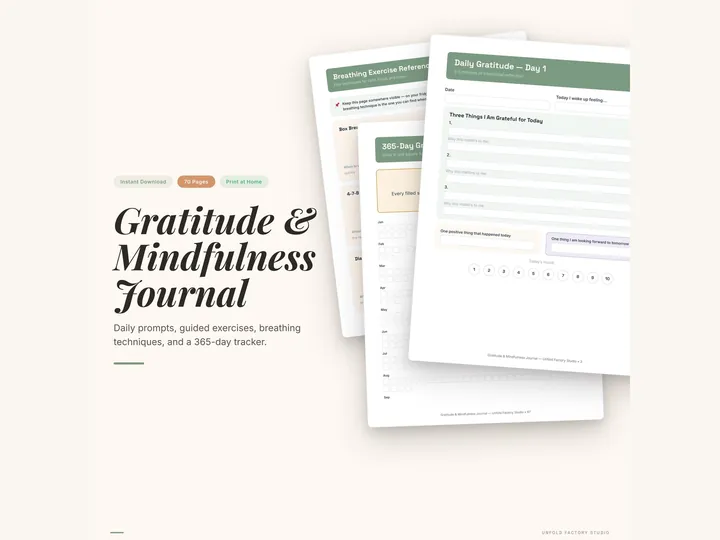
For those who want both the daily structure and the deeper work, pair it with our Gratitude & Mindfulness Journal to balance reflection with intentional positivity.
How to Choose the Right Format for You
Not everyone needs the same tool. Here’s a quick guide:
- New to tracking? Start with a daily check-in sheet (mood + sleep + one trigger). Keep it under 2 minutes.
- Already in therapy? Add weekly reflections and bring them to sessions. Your therapist will thank you.
- Working on deeper patterns? A shadow work journal with structured prompts gives direction without requiring you to generate your own questions.
- Managing medication changes? Prioritize a daily mood + sleep + energy log with date stamps your prescriber can review.
The best system is the one you’ll actually use. Start simple. Add layers only when the base habit is solid.
Frequently Asked Questions
Can a mood journal replace therapy?
No. A mood tracker is a supplement to professional care, not a substitute. It makes therapy more effective by giving you and your therapist concrete data to work with. Think of it as the difference between walking into a doctor’s office saying “my stomach hurts sometimes” versus “here’s a food and symptom log from the last 6 weeks.” The tool improves the treatment — it doesn’t replace it.
How long before I start seeing patterns in my mood tracking?
Most people need 4-6 weeks of consistent tracking before meaningful patterns emerge. Two weeks gives you a baseline. Four weeks reveals weekly cycles. Six weeks starts showing monthly patterns — especially important for anyone whose mood correlates with hormonal cycles, seasonal changes, or work rhythms.
What if tracking my mood makes me feel worse?
This happens, and it’s worth addressing. If daily tracking creates anxiety or rumination, switch to weekly check-ins only. Some people do better with a brief weekly summary rather than daily granularity. If even that feels harmful, talk to your therapist about whether structured self-monitoring is right for your current stage of treatment.
Is a printable tracker better than a mood-tracking app?
It depends on your goals. Apps offer convenience and automated charts. But printable trackers offer zero notifications, full data ownership, and the cognitive benefits of handwriting. Research from the Journal of Cognitive Enhancement (2024) suggests that handwriting emotional reflections activates deeper processing than typing. For shadow work especially, paper tends to produce more honest responses.
Ready to build your system? Browse our full collection of mental health and wellness templates — from daily check-ins to shadow work journals to mindfulness trackers.
Written by Unfold Factory Studio — we build premium digital templates for budgeting, health tracking, planning, and personal growth. Every template is designed to work on day one with zero setup.
Disclaimer: The content in this post is for informational purposes only and is not a substitute for professional medical advice, diagnosis, or treatment. If you are experiencing a mental health crisis, please contact the 988 Suicide & Crisis Lifeline (call or text 988) or your local emergency services.