The difference between a vacation you love and one that drains you isn’t the destination. It’s about 2-3 hours of planning.
That’s it. Two to three focused hours — budgeting, packing, and locking down logistics — separate the trip where everything clicks from the one where you’re arguing about directions at a gas station with no cell service while the dog sitter texts you questions you should have answered before you left.
Summer 2026 travel is shaping up to be expensive. Domestic airfare is up 8% year-over-year, hotel rates in peak destinations are averaging $180-$250/night, and gas prices are hovering around $3.50/gallon nationally. None of that means you can’t take a great trip. It means you need a plan before you start booking.
Set Your Vacation Budget Before You Book Anything
This is the step most people skip — and it’s the one that causes the most stress. You find a deal on flights, book impulsively, then realize you’ve committed to a trip you can’t comfortably afford.
Flip the order. Set the total number first, then book within it.
Break your budget into five categories:
- Transportation (flights, gas, rental car, rideshares): typically 25-35% of total trip cost
- Accommodation (hotel, Airbnb, campsite): 30-40% of total cost
- Food and drinks: budget $50-$75/day per person for sit-down meals, or $25-$40 if you’re cooking some meals
- Activities and experiences: research admission costs upfront — theme parks alone can run $100-$150/person/day
- Emergency fund: 10% of total budget, non-negotiable. Flat tires, last-minute hotel changes, and urgent vet calls don’t care about your itinerary
Booking timing matters. For domestic summer flights, the sweet spot is 6-8 weeks before departure — booking in April or early May for a July trip typically saves 15-20% compared to last-minute fares. Hotels and vacation rentals in popular destinations start filling up by May, so lock those in early and look for free-cancellation policies.
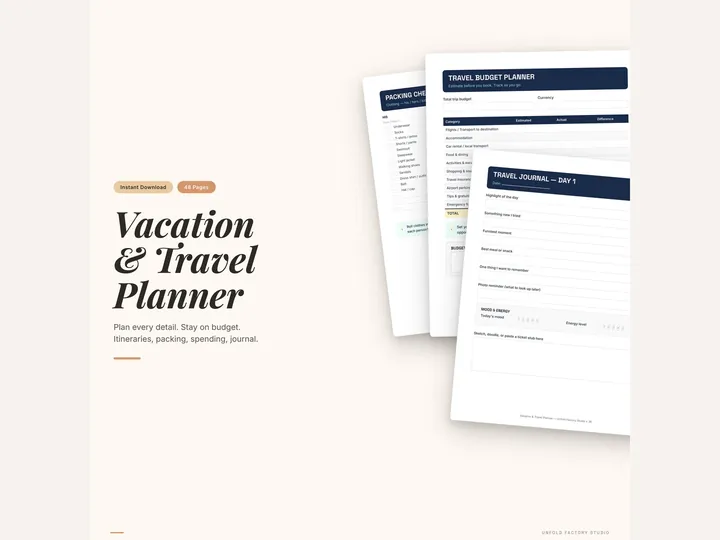
Our Vacation & Travel Planner includes a full budget breakdown tracker so you can set limits per category and track spending in real time during the trip.
Build a Packing System You Can Reuse Every Trip
Packing shouldn’t be a creative exercise every time you travel. Build a master packing list once, save it, and adjust per trip. This eliminates the 11 PM panic-packing where you forget your phone charger and pack three shirts you’ll never wear.
Organize by category, not by day:
- Clothing: check the weather forecast 3 days before departure and pack for the actual conditions, not the vacation you wish you were taking. One outfit per day, plus one backup. Layers beat bulk.
- Toiletries: keep a pre-packed toiletry bag with travel-size duplicates of everything you use daily. Restock after each trip instead of raiding your bathroom every time.
- Documents: ID, insurance cards, reservation confirmations, and a paper backup of your itinerary. Phones die. Paper doesn’t.
- Electronics: chargers, power bank, adapter (if international), headphones. Put all cables in one pouch.
- Medications: full supply plus 3 extra days’ worth. Keep these in your carry-on, never in checked luggage.
The reusable list is the system. Once you’ve built it, every future trip starts with a 15-minute review instead of a 2-hour scramble.
Plan the Road Trip Like a Project
Road trips are the most popular summer travel format — and the most under-planned. Driving 8 hours with no route strategy, no rest stops mapped, and no backup plan is how vacations turn into endurance tests.
Before you leave:
- Map your route with alternatives. GPS is great until construction or accidents reroute you into nowhere. Know the major alternate routes for each leg.
- Budget gas realistically. Calculate total miles, divide by your car’s MPG, multiply by current gas prices. Add 15% for detours and city driving. A 2,000-mile round trip at 28 MPG and $3.50/gallon is roughly $290 — before detours.
- Schedule rest stops every 2-2.5 hours. Driver fatigue causes 100,000 crashes per year in the US according to the NHTSA. Pre-identify rest areas, gas stations, and food stops along your route.
- Prep the vehicle. Check tire pressure, oil level, coolant, wiper fluid, and spare tire condition. An $80 pre-trip inspection is cheaper than a $400 roadside tow.
- Book overnight stays in advance if it’s a multi-day drive. Showing up at 10 PM hoping for a vacancy in a tourist town is a gamble you’ll lose in peak summer.
The Pre-Departure Checklist That Prevents Every Disaster
The things that go wrong on vacation usually went wrong before you left. This checklist closes every loop:
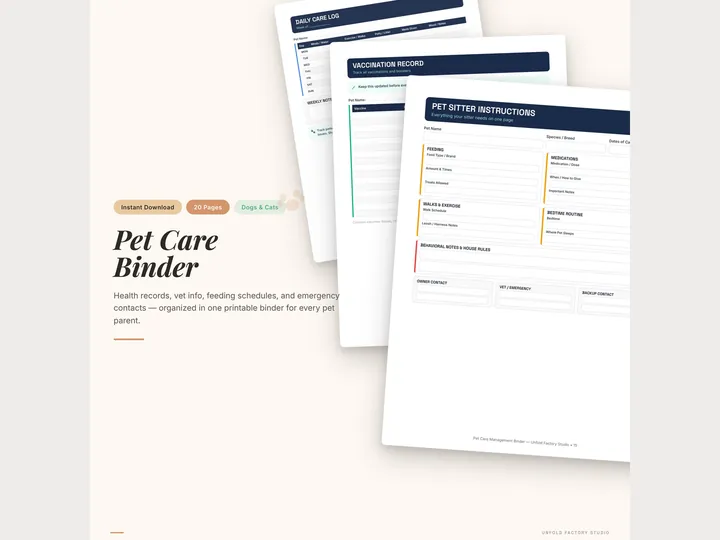
- Pet and home care: confirm your sitter, leave written feeding/medication instructions, share vet contact info, leave a spare key. If you’re boarding, confirm the reservation 48 hours before drop-off. Our Pet Care Management Binder has a dedicated pet sitter instruction sheet designed for exactly this.
- Document backups: photograph your passport, driver’s license, insurance cards, and credit cards. Store copies in your email and your travel partner’s email.
- Medication supply: verify you have enough for the full trip plus buffer days. Refill prescriptions before you leave — transferring prescriptions across state lines is a headache you don’t need.
- Bill payments: set auto-pay for anything due while you’re gone, or pay early. A missed payment because you were “on vacation” still hits your credit score.
- Home security: set light timers, hold mail delivery, let a trusted neighbor know your dates, and make sure all doors and windows lock properly.
Spend 30 minutes on this list the day before departure. It’s the highest-ROI half hour of your entire trip.
Structure Your Itinerary for Enjoyment, Not Efficiency
Over-scheduled trips burn everyone out. You didn’t take a vacation to follow a minute-by-minute itinerary that feels like a work calendar.
The system that works: block mornings and evenings, leave afternoons flexible.
- Mornings: schedule your must-do activities here — museum visits, tours, hikes, reservations. Energy is highest, crowds are smallest.
- Afternoons: leave these open. Nap, explore, sit at a café, stumble into something unexpected. This is where the actual vacation happens.
- Evenings: book dinner reservations in advance for popular restaurants, but keep 2-3 nights free for whatever sounds good that day.
Build in at least one full rest day for trips longer than 5 days. No plans, no driving, no agenda. Your future self will thank you.
The Bottom Line
A great summer trip doesn’t require a luxury budget. It requires a plan that covers the boring stuff — money, logistics, contingencies — so you can focus on the good stuff once you’re there.
Our Vacation & Travel Planner puts your budget, packing list, itinerary, and pre-departure checklist in one system. Plan once, travel stress-free.
Frequently Asked Questions
How far in advance should I start planning a summer vacation?
For domestic trips, 8-10 weeks out hits the sweet spot — far enough to get good rates on flights and accommodation, close enough that weather forecasts start becoming useful. International trips need 3-4 months for passport renewals, visa applications, and overseas flight bookings. Start your budget immediately regardless of timeline.
What’s the biggest vacation budget mistake people make?
Underestimating food costs. Most people budget for flights and hotels but forget that eating out three meals a day for a week can easily run $500-$700 per person. Budget food separately, look for accommodations with kitchens for longer trips, and plan a few grocery-store meals to balance restaurant spending.
How do I pack light without forgetting essentials?
Use a master packing list organized by category and edit it per trip instead of starting from scratch. The rule of thumb: lay out everything you think you need, then remove 30%. You will almost never regret packing less. Wear your bulkiest shoes and jacket on the plane instead of packing them.
Should I book activities in advance or figure it out when I get there?
Book the non-negotiable experiences in advance — popular tours, restaurant reservations, timed-entry attractions. These sell out in summer. Leave 40-50% of your time unplanned for spontaneous exploration. The best travel memories rarely come from a pre-booked itinerary.
Ready to plan your summer trip? Browse our full collection of travel and lifestyle planners — built for real trips, not Pinterest boards.
Written by Unfold Factory Studio — we build premium digital templates for budgeting, health tracking, planning, and personal growth. Every template is designed to work on day one with zero setup.